Happy Earth Day

This morning I had to get my kids to school early so that my son could participate in an Earth Day presentation. His class had gathered up all the wasted food from recent lunches at the school, weighed it, and did some math to figure out how much food on average was going to waste during each lunch at every school in our county. They presented their findings to the entire school and pointed out how the food is not only going to waste, but the resources spent in producing and transporting the food were also then wasted.

I’ve asked my kids in the past to bring home any food they don’t eat from their lunches (unless, of course, it’s something impractical like a half-eaten yogurt with no lid–I had to learn the hard way to point this out to my daughter) or else share anything they don’t want with someone at their lunch table. But the presentation today reminded me about being diligent. Too often I throw away uneaten food instead of taking the time to find a later use for it.

So that’s my resolution for this Earth Day–to use our food carefully. Maybe even prepare and eat a little less… Well, I don’t know about that, but I’ll, um, try. Do you have an Earth Day resolution? If so, what is it?

The Joy of Snakes

img_0086

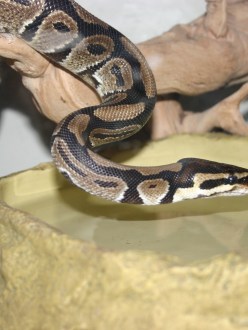
Among the various pets my kids have talked me into accumulating, our ball python Jawzahr (named for the mythical Persian dragon who chased the sun and moon) gets the most frequent expressions of disapproval from friends and family.

Why on earth would you want a snake? they sensibly ask.

My initial answer was, my son wanted it. He was going through his reptile phase, and he’s such a careful and attentive observer of nature, I wanted to reward his interest with a gift. But over time, I’ve become the snake’s biggest fan.

Jawzahr, unlike our other pets, is neat, quiet, and requires almost no maintenance save for regular handling and a defrosted mouse every week or so. He rewards us with his beauty and peacefulness. I unexpectedly discovered that handling him is good for my mental health, too. He is easily startled, so I must be calm and careful when holding him. This has the effect of lowering my own stress level.

Over time, we’ve learned a great deal about snakes from caring for and observing him, and while this isn’t a benefit I ever thought I wanted, it’s made my frequent wilderness hikes more enjoyable. When I encounter a snake now, I don’t experience a jolt of fear the way I once did. I know how to react, and since most snakes are harmless, I can appreciate such moments as rare chances to observe a creature in its natural habitat.

Our fish tank is a hassle, our lizards are smelly and high maintenance, and our rabbits are disdainful and prone to chewing things they shouldn’t. But the python? He’s lovely.

What’s the best pet you’ve ever had? The oddest?

(PS: If you’re in the market for a snake of your own, check at your local humane society, or look for local breeders on places like Craigslist to help keep the pressure of pet trading off wild populations. Captive-bred snakes are often easier to feed and handle than wild-caught ones too.)

How to Name a Book

Have you ever wondered how novels get their names? The process usually goes something like this:

I give my book-in-progress a working title. Lots of writers don’t get hung up on whether this working title is a good one, but I’m completely obsessed with names, so I can’t start writing the story with any seriousness until I know what its name is. My current work in progress had a working title of These Three Words.

I love Stevie Wonder. I love words. I love the song of the same name. I love that title. Alas, I knew it would probably be changed. And it was.

After turning in the complete manuscript of a book, my editor usually asks for a list of title suggestions. I say usually, because there are occasions when my title so obviously belongs on the book, there’s no question of changing it. These Three Words, lovely as it sounds, isn’t the most marketable of titles, so I came up with a list of alternatives. This list is used in an editorial meeting during which a title is chosen–sometimes the editors like something on the list, and sometimes they don’t and pick something of their own or ask for another list of suggestions.

The story formerly known as These Three Words is a SuperRomance that takes place during the Christmas season, so I knew we probably needed a Christmas-y title. I also knew I should focus on the elements in the story that tend to sell books. Namely, a pregnant heroine, an impending baby, and a military hero.

The title my editor ultimately chose was Baby Under the Mistletoe. It works because it gives the reader an idea of what the story might be about–babies and Christmas. It’s sweet, happy, hopeful, and warm.

Not every book has been so easy to come up with a name for. In one memorable instance, two other authors and I spent several weeks brainstorming several long lists of titles for a 3-book series we were doing together, and even with all that effort, none of the titles we came up with were satisfactory.

I’m strongly drawn to a well-titled book, though some of my favorite authors have titles I don’t love–often, when an author becomes a franchise, or the publisher is trying to market them as such, the titles are more a part of the franchise packaging than they are an indicator of the content of the story. Those titles drive me batty, because I have trouble remembering them when trying to recommend a book to a friend.

Do titles matter to you as a reader? If so, what are some of your favorites or least-favorites?

Flawed Characters

Reading the line edit of my upcoming September book last night, I had a rare moment of sheer joy at discovering that I was really happy with something I’d written. I’m usually much more in the camp of “I suck at writing.”

But the thing I was happy about presents a problem for me that I’m not sure how to work out. It’s a character, actually. The hero’s brother in my next release, Made You Look, is the kind of character I love to write. He’s smart and funny, and he’s also bipolar. His life is difficult, he’s insecure, he’s marginally employed… Definitely not the usual romance novel hero material. He’s the kind of guy who only appears as a secondary character in romances.

He’s a great reminder for me that there’s a balance to be struck in creating genre heroes and heroines. Yes, they need to be admirable people, but they also need to have some serious flaws that make them human and relatable. I did manage to create two quite flawed main characters in the book as well, but the hero’s brother is the one who speaks to me most clearly. I’ll be interested to hear reader feedback about him when the book comes out.

So how do we writers best strike the balance between creating flawed characters while still making them heroic? How do you do it, or if you’re strictly a reader, who are some of your favorite flawed heroes and heroines, and why do they work for you?